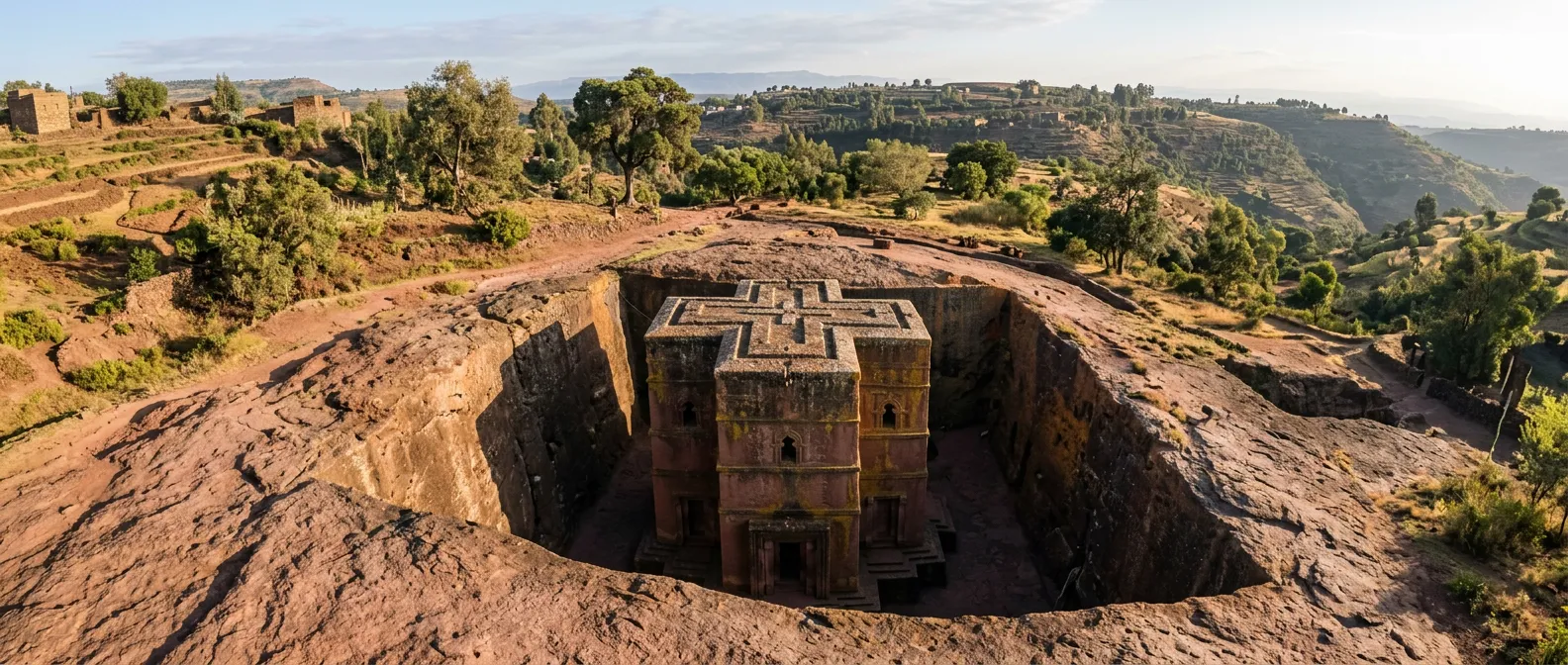
The standard Ethiopian tourist e-Visa application through evisa.gov.et does not require uploading bank statements. However, immigration officers at Bole International Airport may request evidence of sufficient funds upon arrival. UK travellers should carry recent bank statements covering estimated daily costs of $50 to $130 (~£40 to £103).
Last updated: September 2026. Information verified against the evisa.gov.et portal. Requirements may change without notice – always confirm 72 hours before travel.
What Does Proof of Funds Mean for an Ethiopia Visa?
Ethiopia visa proof of funds requirements mean demonstrating sufficient financial means to cover accommodation, meals, transport, and emergencies for your entire planned stay. This livelihood proof obligation stems from Ethiopian immigration regulations and applies to all visa applicants, including tourist, business, and transit visa holders staying longer than 24 hours.
The standard e-Visa application on evisa.gov.et does not require uploading bank statements during the online process. The visa fee, payable in USD, is non-refundable even if the application is denied – this fee does not substitute the financial evidence obligation. Immigration officers at Bole International Airport may request proof of sufficient funds upon arrival, so UK travellers must prepare documentation in advance.
Your passport must be valid for at least 6 months from the date of entry with at least one blank visa page. A return flight booking may also be requested as supporting evidence of your intended departure.
What Qualifies as Proof of Funds for an Ethiopia Visa?
Ethiopia visa proof of funds can be demonstrated through multiple document types. The self-sufficiency obligation applies to all applicants, though the e-Visa application on evisa.gov.et does not require uploading financial documents during the online process.
- Personal bank statements covering the last 30-90 days
- Credit card statements showing available credit limit
- Traveller’s cheques
- Sponsor letter plus sponsor’s bank statements (must include sponsor’s full name, relationship to applicant, contact details, and confirmation of financial responsibility)
- Employer letter confirming salary and financial responsibility
- Prepaid travel bookings (hotel confirmations, prepaid tours)
- Scholarship or grant letters for student travellers
- Cryptocurrency wallets
- Investment portfolios without liquidity proof
- Verbal assurances
Minimum Balance Expectations – How Much Do You Actually Need?
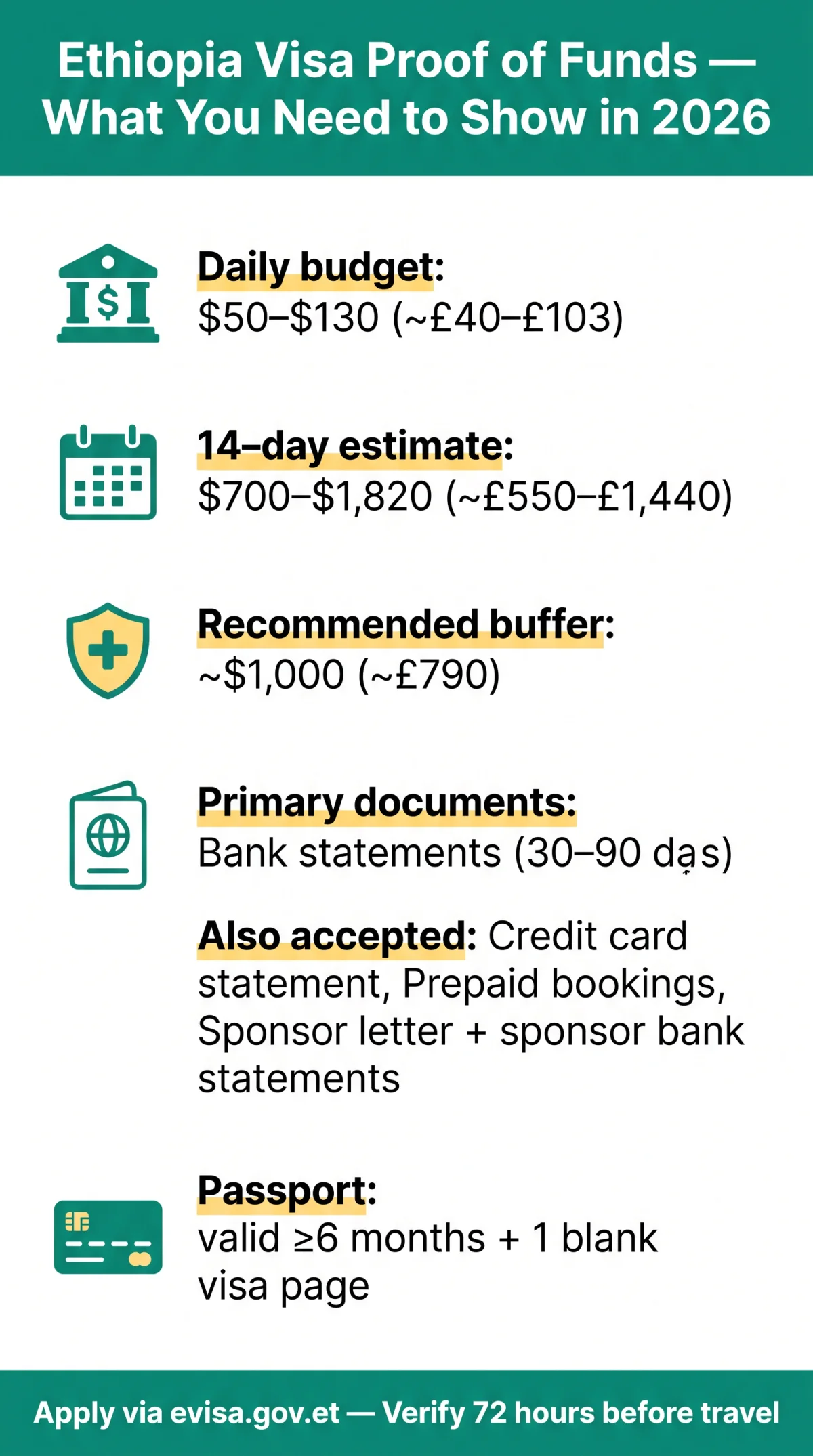
Ethiopia visa proof of funds requirements do not include a published minimum balance on the evisa.gov.et portal. The Immigration and Citizenship Service provides no specific monetary threshold. UK travellers must estimate sufficient funds from typical in-country costs.
| Daily Expense Category | USD | GBP (~2026) |
|---|---|---|
| Accommodation | $30-$80 | £24-£63 |
| Food / meals | $10-$20 | £8-£16 |
| Local transport | $5-$15 | £4-£12 |
| Miscellaneous / emergencies | $5-$10 | £4-£8 |
| Total estimated daily budget | $50-$130 | £40-£103 |
For a 14-day trip, Ethiopia visa proof of funds requirements translate to roughly $700-$1,820 (~£550-£1,440). A practical recommendation is to carry a comfortable buffer balance of ~$1,000 USD (~£790) for a two-week stay, exceeding the bare minimum to account for unexpected costs.
Immigration officers at Bole International Airport may verify that your available funds cover the full intended stay length. Present amounts in both GBP and USD using a current exchange-rate reference, and ensure funds sit in an accessible current or savings account rather than locked investments.
Bank Statements & Financial Documents – What to Submit
UK travellers should prepare recent bank statements covering the last 30-90 days, showing consistent balances above the estimated daily cost of $50-$130. Personal bank statements are the primary document for Ethiopia visa proof of funds, with 3-6 months preferred if an immigration officer at Bole International Airport requests evidence upon arrival.
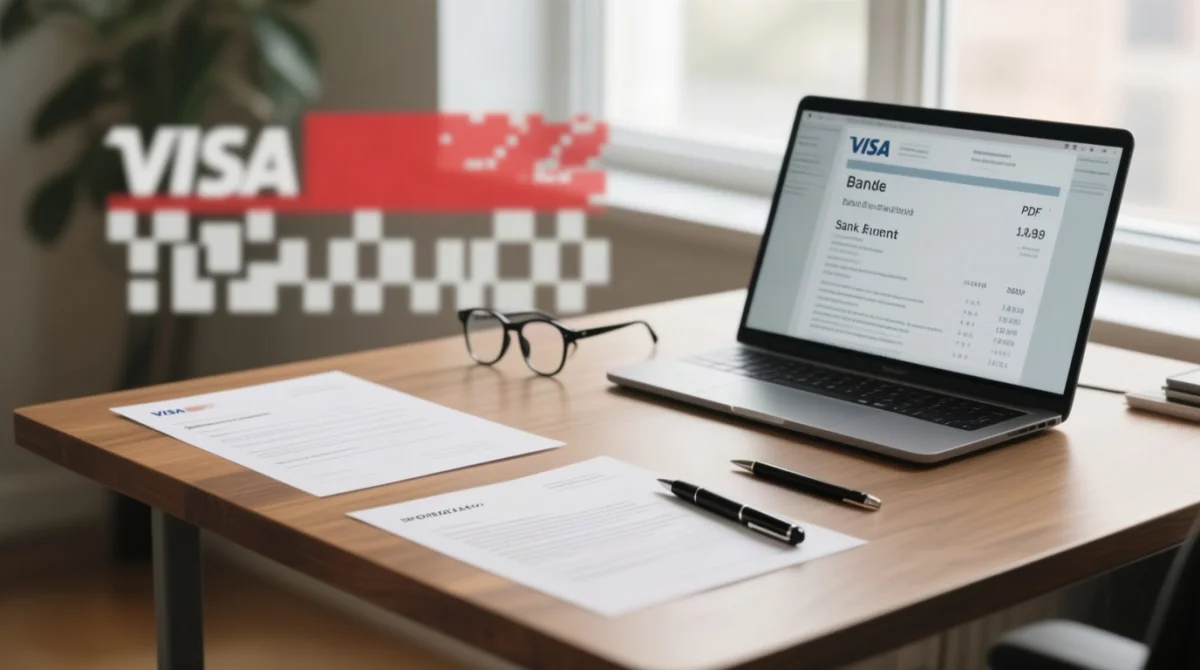
Acceptable formats include a printed statement with bank letterhead or a PDF from online banking showing the account holder name, account number, and current balance. Statements from major UK banks such as HSBC, Barclays, NatWest, and Lloyds are accepted without translation, as English-language documents require no certified translation.
Ethiopia visa proof of funds requirements also permit a sponsorship alternative: a sponsor letter accompanied by the sponsor’s own bank statements, confirming financial responsibility for the traveller.
- Primary document: personal bank statement (30-90 days; 3-6 months if requested at port of entry)
- Format: printed with letterhead or online-banking PDF
- UK bank statements (HSBC, Barclays, NatWest, Lloyds): accepted, no translation required
- Sponsorship: sponsor letter + sponsor’s bank statements
UK Traveller Tips – Preparing Your Proof of Funds for Ethiopia
Ensure funds are in a current or savings account (not ISAs, bonds, or investments); carry a printed bank statement and convert GBP to USD before arriving in Ethiopia. Ethiopia visa proof of funds amounts are typically assessed in USD or ETB.
Carry at least one printed bank statement with bank letterhead; digital copies on a phone serve as supplementary evidence only. Keep all financial documents in hand luggage for immediate access at Bole International Airport, where immigration officers may request proof of sufficient funds upon arrival.
Printable Checklist for Your Hand Luggage:
- Printed bank statements (last 3 months, HSBC/Barclays/NatWest letterhead)
- Hotel booking confirmations
- Return flight booking confirmation
- Sponsor letter + sponsor bank statements (if applicable)
- Currency conversion reference sheet (USD/GBP/ETB)
- Convert GBP to USD before travel; Ethiopia visa proof of funds amounts are typically assessed in USD or ETB.
- Ensure your balance is liquid and accessible – not tied up in investments.
- Apply exclusively through evisa.gov.et (copyright 2017-2026, operated by Ethiopian Airlines for the Immigration and Citizenship Service, Addis Ababa; phone +251 (11) 1262635, email [email protected]).
- Avoid fraudulent sites such as www.ethiopiavisas.net – the Ethiopian government does not accept applications submitted through unofficial portals and is not liable for payments made there.
FAQ
Do I need to upload bank statements for the Ethiopia e-Visa?
No, bank statements are not required for the e-Visa application; only a passport copy, photo, and fee are needed. Immigration officers may still request proof of funds upon arrival at Bole International Airport.
How much money do I need to show for an Ethiopia visa?
The evisa.gov.et portal publishes no minimum balance. Estimated daily costs in Ethiopia for 2026 range from $50 to $130 (~£40 to £103). For a 14-day trip, this equates to roughly $700 to $1,820 (~£550 to £1,440). A recommended comfortable balance is around $1,000 USD (~£790).
How far back should my bank statement go for an Ethiopia visa?
If requested by immigration officers, UK travellers should prepare bank statements covering the last 30 to 90 days. A period of 3 to 6 months is preferred if specifically requested at the port of entry. Ensure the statement shows consistent balances above the estimated daily cost of $50 to $130.
Can I use a credit card as proof of funds for an Ethiopia visa?
Yes, credit card statements showing your available credit limit qualify as proof of sufficient funds. Other acceptable alternatives include personal bank statements, traveller’s cheques, and prepaid travel bookings. Funds must be liquid and accessible, not locked in investments or cryptocurrency wallets.
What happens if I cannot show sufficient funds at Bole International Airport?
Immigration officers at Bole International Airport may request evidence of sufficient funds upon arrival. If you cannot demonstrate financial means to cover your accommodation, meals, and transport, you risk being denied entry. Always carry printed bank statements in your hand luggage to present during these spot checks.
Are UK bank statements accepted for an Ethiopia visa?
Yes, statements from major UK banks such as HSBC, Barclays, NatWest, and Lloyds are acceptable. English-language documents do not require translation. You can provide a printed statement with a bank letterhead or a PDF from online banking showing your name, account number, and balance.
Can someone sponsor my trip for an Ethiopia visa?
Yes, you can use a sponsor letter from an Ethiopian host or organisation. The sponsor letter must include the sponsor’s full name, relationship to the applicant, contact details, and confirmation of financial responsibility. You must also attach the sponsor’s bank statements to prove their financial capacity.
Is there a currency declaration limit when entering Ethiopia?
The provided data does not specify a concrete currency declaration limit for entering Ethiopia. To ensure compliance with customs regulations at Bole International Airport, UK travellers should consult the evisa.gov.et portal or contact the Immigration and Citizenship Service directly for the most current 2026 thresholds.